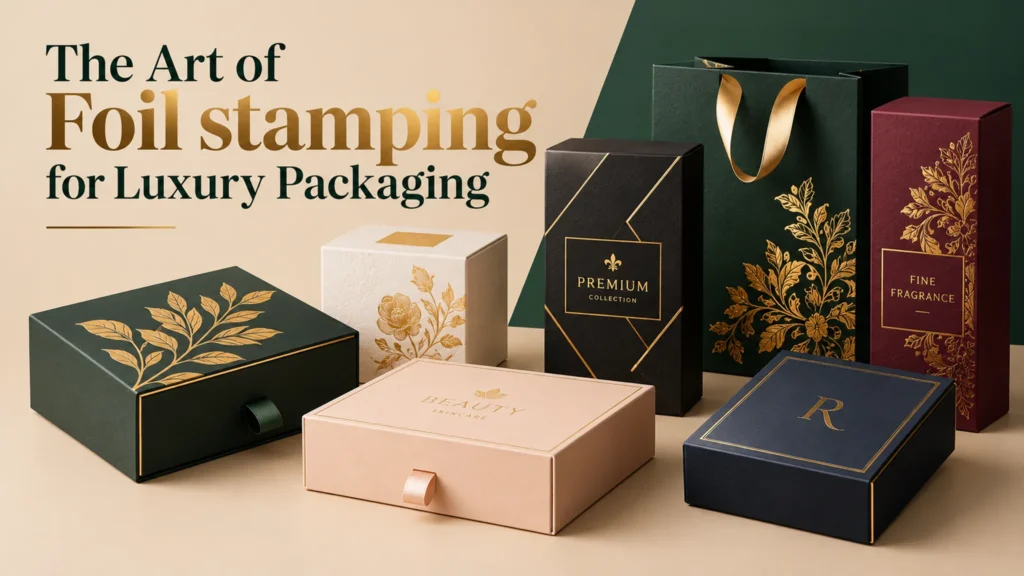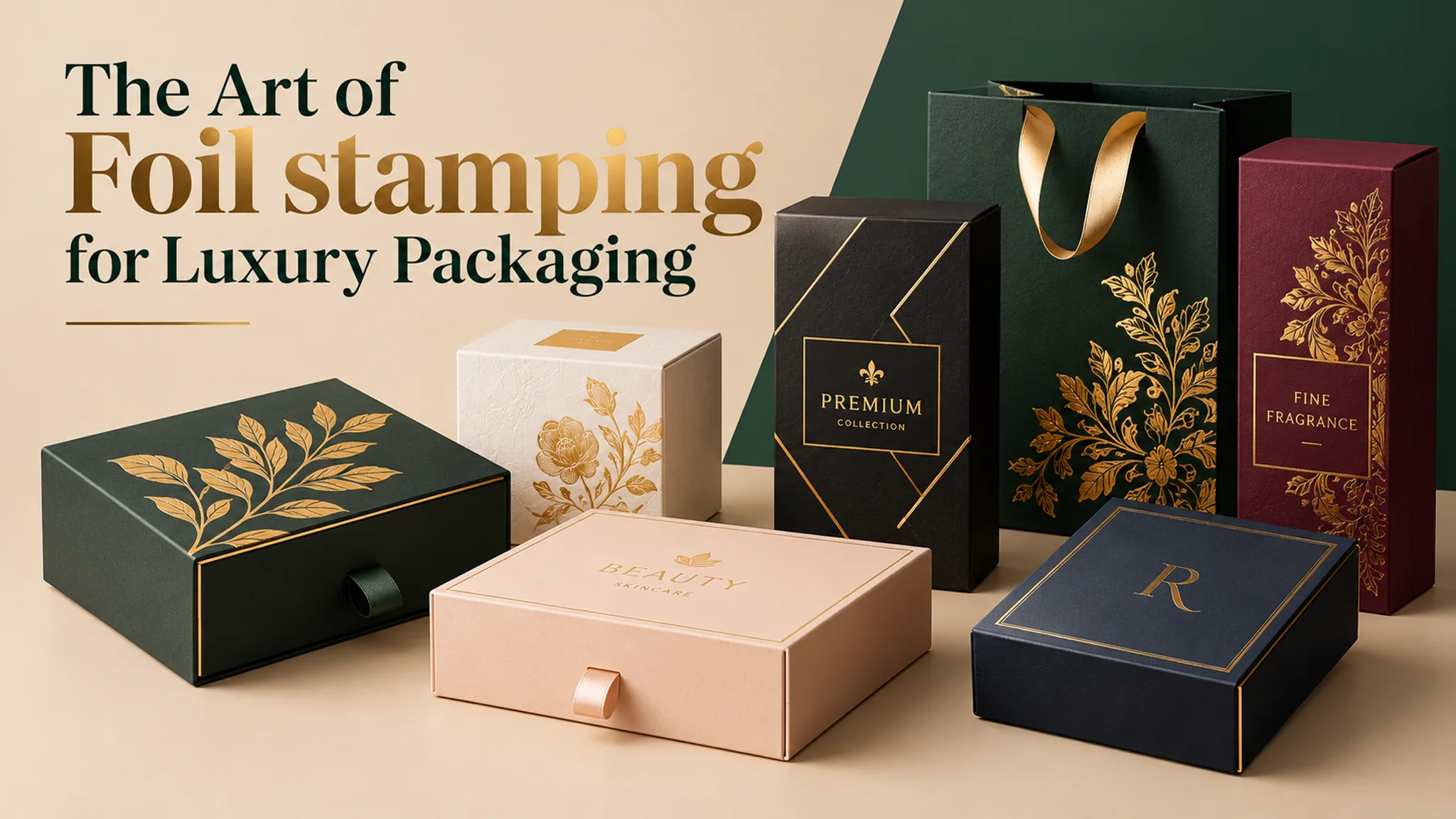
Seeking a luxury option for packaging? What’s more impressive than foil stamping? In the tech-integrated packaging market, inkless foil stamping has quickly replaced traditional printing solutions. This quick packaging transformation demands learning about foil stamping and detailed printing processes. So, this blog will guide you through the key features and step-by-step process of hot foil stamping.
What is Foil Stamping?
Foil Stamping, a popular inkless printing technique, uses heat, pressure, and metal dies to transfer a design onto the cardstock or fabric. With gold, silver, and holographic foil options, multiple foil stamping options can stun shoppers. Far from boring ink-printed designs, foil stamping elevates packaging with an impressive layout and shiny look. In terms of aesthetics, shoppers prefer gold or silver foiling over plain printed packaging.
Key Features of Foil Stamp Printing
Let us explore some core features of foil stamping that make it popular among manufacturers:
- Versatile finishes
A wide variety of finishes, including matte, glossy, metallic, or holographic, make this printing technique popular. You can experiment with appealing foil options and update your packaging.
- Competitive Edge
To win customers’ trust and loyalty, you need to follow competitive designs and techniques. No one is attracted to old printing solutions. Silver or Gold Foil Stamping gathers crowds around the shelves.
- Advanced packaging solution
Hot Stamping offers a more advanced structure and design to your packaging or exterior than other finishing options. Luxury products and gifting items often prefer these advanced stamping options.
- Optimized packaging
Optimizing the exterior, Hot foil stamping brings new life to your design and packaging.
Popular Foil Stamping Options
Manufacturers use several types of foil stamping machines. These machines vary in terms of structure, design, and functionality depending on the packaging type and quantity.
- Flat Foil Stamping
Flat stamping is one of the most common and ideal options for cardstock and corrugated box packaging. It requires a flat surface for printing operations. A 2D flat packaging template is ideal to withstand heat and pressure in flat foil stamping.
- Rotary Stamping
Using cylindrical dies, rotary stamping speedily transfers the graphics onto the required material. Its high speed and efficient finishing make it the most popular option for all types of packaging.
- Vertical Foil Stamping
It is an old traditional stamping technique and is used for small to medium batches. Its slow production process and 2D die material leave a flat vertical stroke. Being less competitive than modern automated cold foil stamping, it is confined to small home industries.
- Sculpted Foil Stamping
An advanced dry printing technique produces 3D impact on packaging with artistic finishes. This technique is widely used by brands for luxury and expensive impact on packaging.
- Peripheral Foil Stamping
Working on a rolling mechanism, peripheral hot stamping is used for cylindrical and round boxes. It applies foil or pigmented stamping on 360-degrees dimensions all around the box. Common examples of hot stamping foil include mugs, kitchenware, beverage bottles, and writing tools.
Types of Foils in Hot Foil Stamping
Thinking of hot foil stamping, what comes to your mind? If your imagination is limited to shiny gold and silver stamping, you should review these foiling options.
- Metallic Foil
Featured with a shiny glow, these foils are available in gold, silver and copper shades. However, solid colors (red, blue, green, yellow, etc.) are also available in metallic foils.
- Pigmented Foil
With colorful ink pigments, these foils make book covers, document covers, packaging, and gift boxes impressive.
- Matte Foil
Engineered for elegance, these matte foils are popular for apparel and luxury packaging items.
- Holographic Foil
Holographic foils give a colorful rainbow appearance after hot stamping. That is why Custom Spot UV Folders and packaging boxes are often designed with this state-of-the-art technique.
Common Applications of Hot Foil Stamping
Hot foil stamping highlights borders, text, and business information effortlessly. This dry printing technique enhances the luxury impact and grabs buyers’ attention instantly. This technique is commonly used in:
- Paperboard Boxes
- Food and Beverage Packaging
- Rigid Cartons
- Cosmetics and Skincare Packaging
- Healthcare Product Boxes
- Embossed Pillow Boxes
- Kraft Embossed Boxes
- Business Cards
- Greeting Cards
- Book Covers
- Special Document Covers
- Corporate documents and publishing
How Does Foil Stamping Work in Packaging?
Foil stamping involves multiple steps. Let us have a look at them one by one:
- Custom Metal Die production
First, the die design, such as logos, textures, text, or images, is structured. These designs are confirmed, depending on the client’s packaging demands and design. Sometimes, business logos are required for foil stamp printing. In other cases, some graphics are chosen. Then, a metal die is engraved with metals. Popular metals for dies include brass, copper, steel, and magnesium.
- Foil Roll Selection
Next, a foil roll is selected as per clients’ requirements. Some packaging boxes use metallic foils while others use matte options.
- Foil Stamping with Heat and Pressure
Finally, foil stamping is processed by placing a metal die above the foil roll. The packaging material, like cardstock or rigid paper stock, is placed under the foil roll. Under specific pressure and heat, the die presses the metal roll that prints the die graphics on the 2D template. This process may or may not be repeated several times to give different effects.
- Finishing and Quality Assurance
As the foil stamping is completed, the sharpness, resolution, and precision are assessed. High-end foil stamping features a smooth and crisp surface with no gaps or excessive foil patches.
- Additional finishing and printing processes
Several other processes may be run for additional versatility. Lamination, embossing, debossing, and varnishing are optional processes.
Printing Constraints and Precautionary Measures
With the best designs and crafting techniques, you may face challenges. So, consider these design and printing constraints before the final production:
- Never choose the smallest font or ultra-small designs for foil stamping. Choosing a minimum stroke above 0.33 mm provides fine resolution.
- Hot foil stamping is often combined with embossing, debossing, Spot UV, and other advanced finishing techniques. Never try to blend these. Each printing technique must complement the other.
- Check the metal die quality and customize engraving. If engraving does not meet custom standards, your design cannot achieve excellence and proficiency.
Bottom Line
Packaging acts as the face of your brand and a primary source to connect with users. No doubt, foil-stamped packaging appeals more than digital or offset printing options. Taking risks on production is just a waste of money. Choosing top-rated Box packaging suppliers saves money and enhances branding. Hive Custom Boxes with tech-integrated tools bring new life to your packaging. Whether you need hot foil stamping, ink-based printing, or luxury finishing solutions, we are the leading packaging suppliers. Contact us for the best consultation and crowd-gathering packaging services.